Hormuz Is Not Far Away: How the Iran War Reaches Brazilian Households
Brazil produces and exports oil, but it remains exposed to international energy prices, imported fuels, and fertilizers. That is how a war more than 10,000 kilometers away reaches supermarkets, inflation, and interest rates.
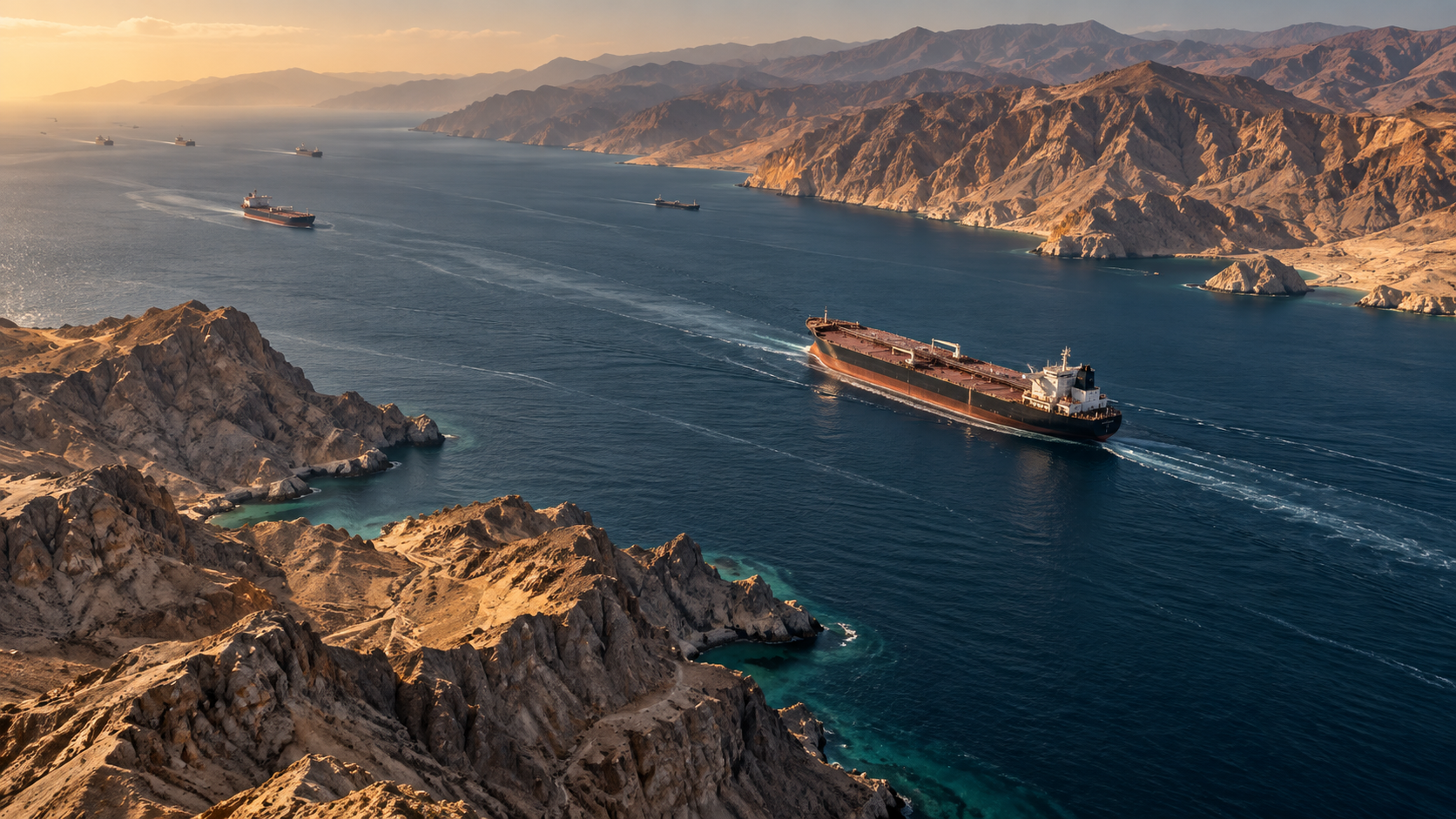
Picture a tanker stalled between Iran and Oman. It is thousands of kilometers from Brazil, yet its cargo — or its absence — can reappear in the cost of diesel for a truck in Mato Grosso, the price of fertilizer for a farm in Paraná, and, weeks later, a grocery bill in São Paulo.
The transmission chain is long, but it can move quickly. It starts at the Strait of Hormuz, the narrow waterway connecting the Persian Gulf to the Arabian Sea. It ends not only at the gas station but also in freight rates, food prices, inflation, public spending, and potentially interest rates.
The risk increased again in early October 2026. US President Donald Trump said he had rejected Iran's latest peace proposal and suggested bombing could intensify after the November 3 US midterm elections. More American naval forces were heading toward the region, while a tanker was struck in the strait. Negotiators were still seeking an agreement, but major differences remained unresolved.
This is not only a confrontation between Washington and Tehran. It concerns the security of one of the global economy's main arteries.
Why such a narrow waterway matters
Hormuz is the only maritime route for much of the oil and gas exported by Persian Gulf producers. Saudi Arabia and the United Arab Emirates have pipelines that bypass it, but those alternatives cannot replace the strait's full normal capacity.
According to the US Energy Information Administration, 21.6 million barrels per day of oil and other liquids crossed Hormuz in the fourth quarter of 2025. During the war, the average fell to 4.9 million barrels per day in the second quarter of 2026 — a decline of nearly four-fifths.
The effect extends beyond missing barrels. Shipowners demand higher insurance coverage. Companies divert vessels. Refineries seek other suppliers. Governments release reserves, subsidize fuel, or cut taxes. Each response buys time, but each also shifts costs.
In September, the EIA reported that Brent crude averaged $91 per barrel in August as Middle Eastern exports remained constrained. It also pointed to an additional problem: attacks around Bab el-Mandeb reduced Saudi shipments through the Red Sea, one of the routes used to bypass Hormuz.
The Brazilian paradox
Brazil produced an average of 3.8 million barrels of oil per day in 2025 and recorded net crude-oil exports of 1.7 million barrels per day, according to Brazil's National Agency of Petroleum, Natural Gas and Biofuels, known as ANP. At first glance, those figures might suggest immunity from a Gulf crisis. They do not.
Crude oil and refined fuels are not interchangeable products. Brazil exports large volumes of crude while continuing to import refined products that its refining system does not supply in sufficient quantities. ANP data show net imports of petroleum products in 2025 despite the country's crude-oil surplus.
Oil and fuels are also traded through connected markets. A barrel produced in Brazil is valued in relation to international prices. Refineries, importers, and distributors cannot calculate their costs as if the country were isolated from the rest of the world.
This creates a paradox. Higher oil prices can increase revenues for exporters and oil-producing governments. At the same time, they can raise fuel and transport costs, add to inflation, and strain the federal budget. The gains and losses do not fall on the same households, companies, or regions.
From diesel to the supermarket
Most goods in Brazil travel at least part of the way by road. When diesel becomes more expensive, the effect does not stop at a truck's fuel tank. It enters the cost of moving grain, meat, medicine, construction materials, and manufactured goods.
Pass-through is neither immediate nor uniform. Companies can absorb part of an increase for a while. Freight contracts may delay adjustments. Competition, inventories, and demand also shape final prices. But the longer the shock lasts, the harder it becomes to prevent it from moving through the supply chain.
The Brazilian government has already acknowledged this channel. In March, the Ministry of Mines and Energy established a monitoring group to follow the war's effects on national fuel supplies. In June, ANP reorganized its priorities to implement measures involving subsidies for diesel, gasoline, and cooking gas, while strengthening price oversight.
Such interventions can protect consumers in the short run, but they do not make the underlying cost disappear. It can be divided among companies, consumers, and the state — through subsidies, tax reductions, or other public spending.
The second channel: fertilizers
Brazil's agricultural vulnerability is less visible at the gas station but can be just as important. The country imports between 80% and 85% of the fertilizers it consumes, according to Banco do Nordeste, a Brazilian regional development bank. The Gulf is a significant supplier of urea and ammonia, which are used in nitrogen fertilizers.
Even when a Brazilian shipment does not originate in Iran, lost Gulf supply reorganizes purchases, routes, and prices elsewhere. Fertilizer bought today affects a future harvest. The pressure can therefore emerge with a delay: first in farmers' purchasing negotiations, then in planting costs, and eventually in agricultural margins or food prices.
In August, Brazilian authorities recommended giving fertilizer cargo priority at public ports to support supplies for the 2026–2027 crop season. Expensive energy and fertilizer can therefore hit production and transportation at the same time.
Who can benefit — and who is most exposed
An energy crisis does not produce one single outcome for “Brazil.” It redistributes opportunities and costs. Oil producers and exporters may receive higher prices. Biofuels become more competitive. Brazilian food exporters may gain market share if more Gulf-dependent competitors face higher costs.
On the exposed side are lower-income households, for which transportation, cooking gas, and food consume a larger share of the budget. Trucking companies and farmers dependent on diesel or imported inputs have less room to absorb a prolonged increase. The government also faces a difficult choice: allow more pass-through to prices or use public resources to cushion it.
In October, the United Nations Development Programme warned that expensive energy, extreme weather, and high borrowing costs were squeezing developing economies. Many governments had already used much of their fiscal room to protect households.
What we still do not know
Four uncertainties remain central: whether negotiations can produce a verifiable and durable reopening; how long alternative routes can operate at high intensity; how far emergency inventories can cushion the shock; and how Brazil combines fuel pricing, taxes, subsidies, exchange rates, stocks, and advance fertilizer purchases.
Political announcements can briefly reduce prices without restoring the confidence of insurers and shipping companies. Pipelines, terminals, and ports have physical limits and may themselves become targets. In July, the International Monetary Fund concluded that markets had absorbed part of the shock but warned that buffers were running low.
Three scenarios — not predictions
What to watch
The most useful indicators are actual vessel and oil volumes through Hormuz; incidents involving ships, ports, and pipelines; US–Iran negotiations; Brent prices and war-risk insurance; Saudi and Emirati bypass flows; Brazilian fuel and fertilizer prices; and government decisions on subsidies, taxes, and inventories.
The takeaway
Hormuz matters not only because so much oil normally crosses it. It matters because the world has concentrated a large share of its energy system in a narrow, difficult-to-replace space exposed to war.
Brazil has real advantages: it produces oil, exports food, manufactures biofuels, and sits far from the battlefield. But distance is not isolation. The country remains connected through international prices, imported refined fuels, fertilizers, freight, and financial expectations.
The most useful question, then, is not whether Brazil wins or loses from expensive oil. It is who benefits, who pays, for how long, and which investments could reduce vulnerability when the next crisis arrives.
To understand more
Independent editorial recommendations. These links are not affiliated.
Sources and documents
Documents and reporting used to verify and contextualize this analysis.
- Associated Press Trump says latest Iran peace offer is not enough Negotiations, naval deployments, and incidents in Hormuz in early October 2026. Open source ↗
- Associated Press Mediators work to broker a US–Iran deal Unresolved issues in negotiations to end the fighting and reopen the strait. Open source ↗
- U.S. Energy Information Administration Short-Term Energy Outlook: Global Oil Markets Prices, Middle Eastern exports, and constraints on shipping routes. Open source ↗
- U.S. Energy Information Administration World Oil Transit Chokepoints Oil flows through Hormuz before and during the war. Open source ↗
- International Monetary Fund The Oil Market Absorbed the War Shock, but Buffers Are Running Low Inventories, alternative routes, and global market resilience. Open source ↗
- United Nations Development Programme Military Escalation in the Middle East: Cushioning the Global Shock Fiscal and social effects of the energy shock in developing economies. Open source ↗
- Brazilian National Agency of Petroleum ANP releases consolidated data for the regulated sector in 2025 Brazilian oil production and net crude exports. Open source ↗
- Brazilian National Agency of Petroleum Oil and petroleum-product imports and exports Monthly foreign-trade series updated in September 2026. Open source ↗
- Banco do Nordeste / ETENE Economic Impacts of the Middle East Conflict Brazilian fertilizer dependence and transmission channels to agriculture. Open source ↗
- Brazilian Ministry of Ports and Airports Brazil gives fertilizer unloading priority at public ports Emergency measure for the 2026–2027 crop season. Open source ↗